.png)
WIND TURBINE SUPPRESSION SYSTENS SOUTH AFRICA & AFRICA
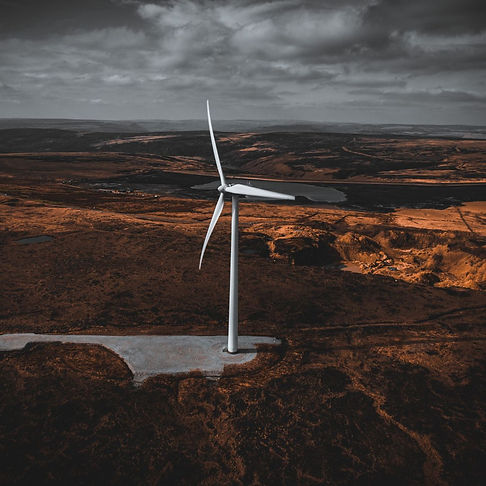
Wind turbines present a fire risk that is as serious as it is difficult to manage. Located in remote or offshore environments, often hundreds of metres from the nearest access point, a turbine fire is virtually impossible to suppress with conventional methods once it takes hold. The nacelle — housing the gearbox, generator, hydraulic systems, and electrical components — concentrates multiple ignition sources in an enclosed space with limited ventilation and no practical external access for emergency services. Real Fire Suppression engineers integrated fire protection systems specifically for wind turbine environments, combining early detection with automatic suppression to address the risk before it becomes unrecoverable.
The Risk
The primary ignition sources in a wind turbine are the gearbox and hydraulic system, where oil leaks onto hot surfaces, the generator and power electronics, where electrical faults and overheating are a constant risk, and the transformer and cable runs at the base of the tower. A nacelle fire at height is beyond the reach of ground-based fire services. Without an automatic suppression system, total asset loss is the most likely outcome. Beyond the turbine itself, an uncontrolled fire in a wind farm carries a serious risk of spreading to adjacent turbines, surrounding vegetation, and in the case of offshore installations, associated infrastructure.
Our Solution
Real Fire Suppression installs detection and automatic suppression systems engineered to the specific layout and risk profile of each turbine type. Detection systems are positioned to identify heat, smoke, and flame at the earliest possible stage across the nacelle, hub, and tower base. Suppression systems are selected and configured to address the specific ignition sources present — including lubrication oil fires, electrical equipment, and hydraulic fluid — with agents and delivery systems appropriate to each zone. All systems are designed for automatic activation without requiring human intervention, which is essential given the remote and elevated nature of turbine installations. Full commissioning documentation is provided on completion to support insurance, lender, and asset management requirements.
Who We Work With
Real Fire Suppression has experience across the renewable energy sector in South Africa and across 23 African countries, including work with Enel Green Power. We work alongside EPC contractors, turbine manufacturers, and independent power producers to integrate fire protection into new installations and retrofit existing assets.
FREQUENTLY ASKED QUESTIONS
Why can't ground-based fire services protect a wind turbine?
A nacelle fire occurs at the top of a tower that is typically between 80 and 120 metres high. Ground-based fire services cannot reach the fire, and by the time a turbine fire is visible from the ground it has almost always progressed beyond the point where suppression is possible. Automatic onboard suppression is the only practical means of protection.
What are the main ignition sources in a wind turbine?
The gearbox and hydraulic system, where oil contacts hot surfaces, the generator and power electronics, where electrical faults and overheating occur, and the transformer and cable infrastructure at tower base level. Each zone requires a tailored detection and suppression approach.
What suppression agents are used in wind turbines?
Agent selection depends on the specific turbine type, layout, and the ignition sources present in each zone. We do not apply a standard product across all installations — each system is engineered to the risk profile of the asset.
Can suppression systems be retrofitted to existing turbines?
Yes. We design and install suppression systems for both new turbine installations and retrofits on existing assets, working within the constraints of the turbine's existing layout and access points.
Do you work with EPC contractors and turbine manufacturers?
Yes. We regularly operate as a specialist subcontractor within larger EPC programmes, integrating our fire protection scope with the broader project delivery team and turbine manufacturer requirements.
Do you provide documentation for insurance and asset management?
es. Full commissioning certificates, as-built drawings, and compliance records are provided with every installation to support insurance underwriting, lender requirements, and ongoing asset management.